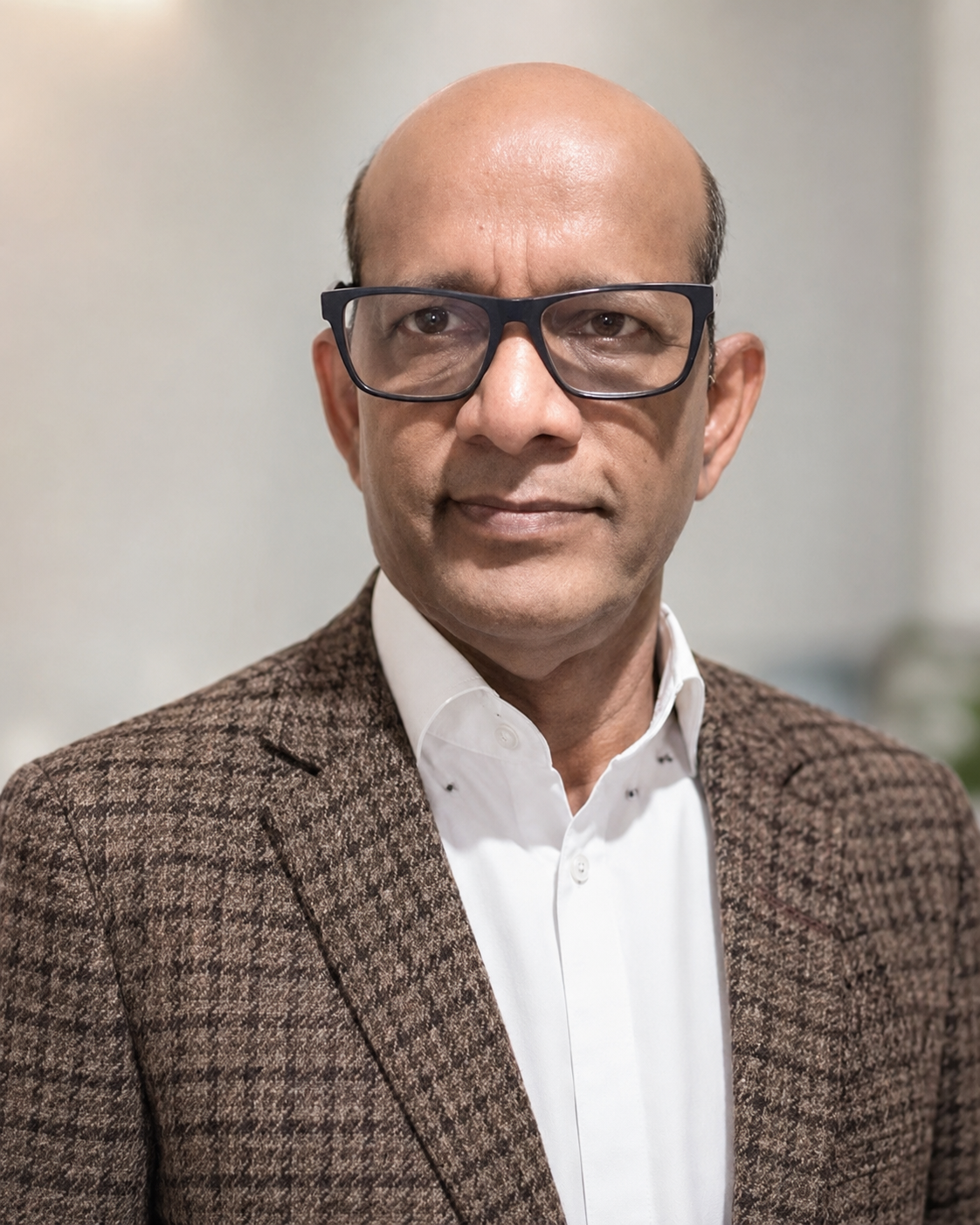

After three decades of working with SAP, I sometimes reflect on how much the technology has changed.
The SAP environment I encountered early in my career is very different from the one enterprises are discussing today.
Systems have become more connected. User experiences have improved. Analytics have become faster. Cloud platforms have changed how solutions are deployed and maintained. Clean Core principles are reshaping how organizations approach extensions. Business AI is beginning to influence how information is interpreted and decisions are supported.
The journey has been significant—and I have enjoyed being part of it.
But beneath all this technological progress, many of the most important transformation questions have remained remarkably consistent.
Are we solving the right business problem?
Technology programs can easily become organized around systems, modules, requirements and project milestones.
All of these are necessary. But transformation begins with a more basic question:
What business problem are we trying to solve?
Is the objective to improve customer service? Reduce inventory? Shorten cycle time? Establish consistent global processes? Improve planning? Strengthen controls? Enable growth?
When the intended business outcome is unclear, a program can complete its technical scope without creating the expected operational improvement.
A strong transformation keeps returning to the business objective—not only during the business case, but throughout design, implementation and adoption.
Is the process clear from beginning to end?
Organizations are usually structured by functions. Business processes are not.
A customer order may involve sales, planning, manufacturing, warehousing, logistics, finance and customer service. Each department may complete its individual activity while the overall process remains slow, fragmented or difficult to manage.
SAP connects these activities, but connection alone does not create process clarity.
The organization must decide:
- Where does the process begin and end?
- Which handoffs are necessary?
- Which variations create real business value?
- Which exceptions should be eliminated?
- Who is responsible for the end-to-end result?
If these questions remain unanswered, the system may simply make an unclear process move faster.
Can the data be trusted?
Every generation of enterprise technology has reinforced the importance of data.
Planning depends on reliable demand, inventory, lead times and sourcing information. Production depends on accurate materials, resources and operating parameters. Customer commitments depend on the information flowing through the entire process.
New reporting tools can expose data problems more quickly. AI can analyze larger volumes of information and identify patterns that people may not see.
But neither analytics nor AI can create reliable decisions from information whose meaning, ownership or quality remains uncertain.
Data therefore cannot be treated only as a migration activity completed before go-live. It is an operating responsibility that continues throughout the life of the system.
Who owns the decision?
Enterprise systems provide information, recommendations, workflows and controls.
But someone must still decide what action should be taken.
When an exception appears, is the responsible owner clear? Does that person have the authority to act? Are the decision criteria understood? What should happen when service, inventory, cost and capacity objectives conflict?
A dashboard may show that performance has moved outside the expected range. An AI capability may recommend a response. But neither produces value unless the organization can convert the signal into accountable action.
Technology can support a decision.
It cannot substitute for unclear decision rights.
Can the organization sustain the new way of working?
A successful go-live is an important achievement, but it is not the final measure of transformation.
The more meaningful test comes later:
Can people operate the process confidently after the project team steps back?
Can the organization maintain its data, controls and process discipline? Can recurring exceptions be eliminated instead of repeatedly repaired? Can the solution evolve without rebuilding the complexity that the transformation was intended to remove?
Sustainable transformation requires more than training people to complete transactions.
People need to understand the purpose of the process, how their decisions affect other functions and what they should do when normal conditions change.
Better technology raises the standard
As SAP capabilities improve, expectations naturally rise.
Clean Core promises a more maintainable and adaptable technology foundation. Cloud services provide greater flexibility. Business AI offers new ways to interpret information, assist users and coordinate work.
These capabilities are valuable.
But better technology also raises the standard for business clarity.
An organization cannot take full advantage of a clean architecture while preserving unnecessary process complexity. It cannot rely on AI-driven decisions while tolerating unreliable data. It cannot automate an end-to-end process without establishing ownership across departmental boundaries.
The technology may be new, but the underlying management responsibilities remain.
What three decades have reinforced
My SAP journey has reinforced a simple lesson:
Enterprise transformation succeeds when technology, process, data, accountability and people move together.
If one of these elements is neglected, the others eventually carry the consequences.
The system may be technically sound while the process remains difficult. The process may be well designed while poor data weakens execution. Information may be available while decision ownership remains unclear. Training may be completed while the organization continues relying on old workarounds.
Technology continues to advance—and that is good for SAP customers, practitioners and the broader enterprise community.
But transformation should never be reduced to a technology upgrade.
The platforms will continue changing. New capabilities will emerge. The language used to describe transformation will evolve.
The enduring questions will remain:
Are we solving the right problem?
Is the process simpler and clearer?
Can we trust the data?
Does someone own the decision?
Can the organization sustain the result?
After approximately 30 years with SAP, I remain optimistic about where the technology is going.
I am equally convinced that its value will continue to depend on how thoughtfully enterprises answer these questions.


Leave a Reply